FLOATING BACK
Floating Learning Center (AYDA Competition)
Floating Learning Center (AYDA Competition)
FLOATING BACK
Location
Location
:
:
Area
Area
:
:
Completion Date
Completion Date
:
:
Collaboration
Collaboration
:
:
Phi Phi, Krabi, Thailand
Phi Phi, Krabi, Thailand
784 sq.m
784 sq.m
2024
2024
-
-

The project aims to bring back art and cultural traditions that have gradually faded over time. On Phi Phi Island, local culture has increasingly been influenced and overshadowed by Western tourism, causing many traditional identities to slowly disappear. The project therefore creates a floating cultural space that brings these fading traditions back into people's awareness. Southern Thai culture is introduced within areas commonly accessed by Western visitors, allowing local traditions to gradually reconnect with the island and its cultural roots.
The project aims to bring back art and cultural traditions that have gradually faded over time. On Phi Phi Island, local culture has increasingly been influenced and overshadowed by Western tourism, causing many traditional identities to slowly disappear. The project therefore creates a floating cultural space that brings these fading traditions back into people's awareness. Southern Thai culture is introduced within areas commonly accessed by Western visitors, allowing local traditions to gradually reconnect with the island and its cultural roots.
The project aims to bring back art and cultural traditions that have gradually faded over time. On Phi Phi Island, local culture has increasingly been influenced and overshadowed by Western tourism, causing many traditional identities to slowly disappear. The project therefore creates a floating cultural space that brings these fading traditions back into people's awareness. Southern Thai culture is introduced within areas commonly accessed by Western visitors, allowing local traditions to gradually reconnect with the island and its cultural roots.
About the project
About the project
About the project
The project aims to bring back art and cultural traditions that have gradually faded over time. On Phi Phi Island, local culture has increasingly been influenced and overshadowed by Western tourism, causing many traditional identities to slowly disappear. The project therefore creates a floating cultural space that brings these fading traditions back into people's awareness. Southern Thai culture is introduced within areas commonly accessed by Western visitors, allowing local traditions to gradually reconnect with the island and its cultural roots.

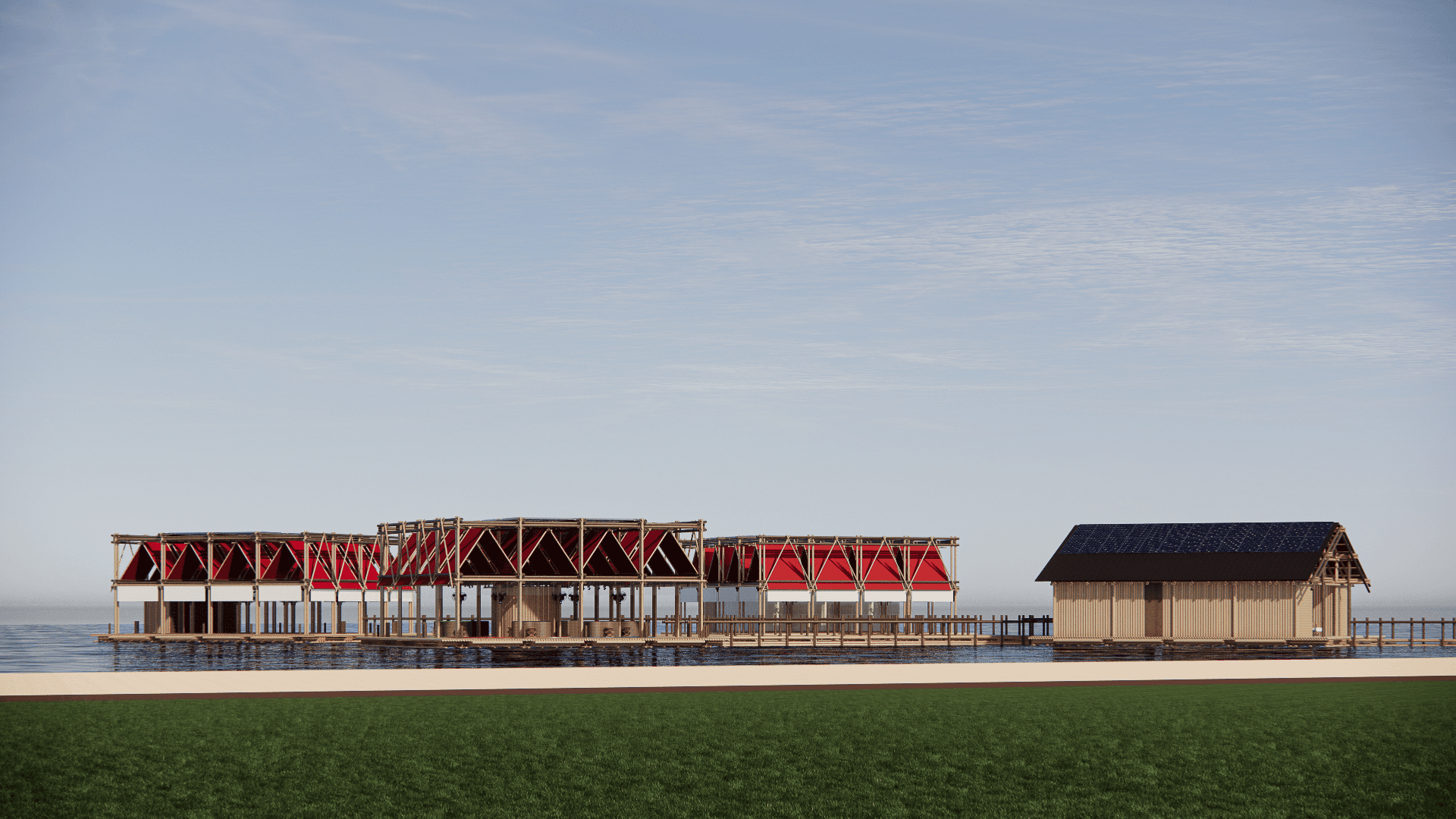
This concept develops into a modular architectural system that can connect and expand across the water, while also serving as a destination where tourists can arrive by boat and participate in cultural activities. The modules are designed to be adaptable and deployable in different locations, supported by solar panels and plastic flotation tanks that allow the structure to operate independently. The architecture also draws from Southern Thai culture through traditional roof forms, bamboo materials, and red fabric inspired by the Sakai people, bringing these elements together to create a contemporary cultural identity.
This concept develops into a modular architectural system that can connect and expand across the water, while also serving as a destination where tourists can arrive by boat and participate in cultural activities. The modules are designed to be adaptable and deployable in different locations, supported by solar panels and plastic flotation tanks that allow the structure to operate independently. The architecture also draws from Southern Thai culture through traditional roof forms, bamboo materials, and red fabric inspired by the Sakai people, bringing these elements together to create a contemporary cultural identity.
This concept develops into a modular architectural system that can connect and expand across the water, while also serving as a destination where tourists can arrive by boat and participate in cultural activities. The modules are designed to be adaptable and deployable in different locations, supported by solar panels and plastic flotation tanks that allow the structure to operate independently. The architecture also draws from Southern Thai culture through traditional roof forms, bamboo materials, and red fabric inspired by the Sakai people, bringing these elements together to create a contemporary cultural identity.

Above the water, an existing building is repurposed into a restaurant, creating an opportunity for the local community to generate income. It also serves as a resting and dining space where visitors can relax after participating in activities on the floating platforms.
Above the water, an existing building is repurposed into a restaurant, creating an opportunity for the local community to generate income. It also serves as a resting and dining space where visitors can relax after participating in activities on the floating platforms.
Above the water, an existing building is repurposed into a restaurant, creating an opportunity for the local community to generate income. It also serves as a resting and dining space where visitors can relax after participating in activities on the floating platforms.

Upon arrival, visitors follow a long pathway leading into the first building, which serves as an exhibition space showcasing different aspects of Southern Thai culture. The exhibition introduces the cultural roots, traditions, and their significance, allowing visitors to understand the identity of the region before continuing into the space to participate in various activities.
Upon arrival, visitors follow a long pathway leading into the first building, which serves as an exhibition space showcasing different aspects of Southern Thai culture. The exhibition introduces the cultural roots, traditions, and their significance, allowing visitors to understand the identity of the region before continuing into the space to participate in various activities.
Upon arrival, visitors follow a long pathway leading into the first building, which serves as an exhibition space showcasing different aspects of Southern Thai culture. The exhibition introduces the cultural roots, traditions, and their significance, allowing visitors to understand the identity of the region before continuing into the space to participate in various activities.
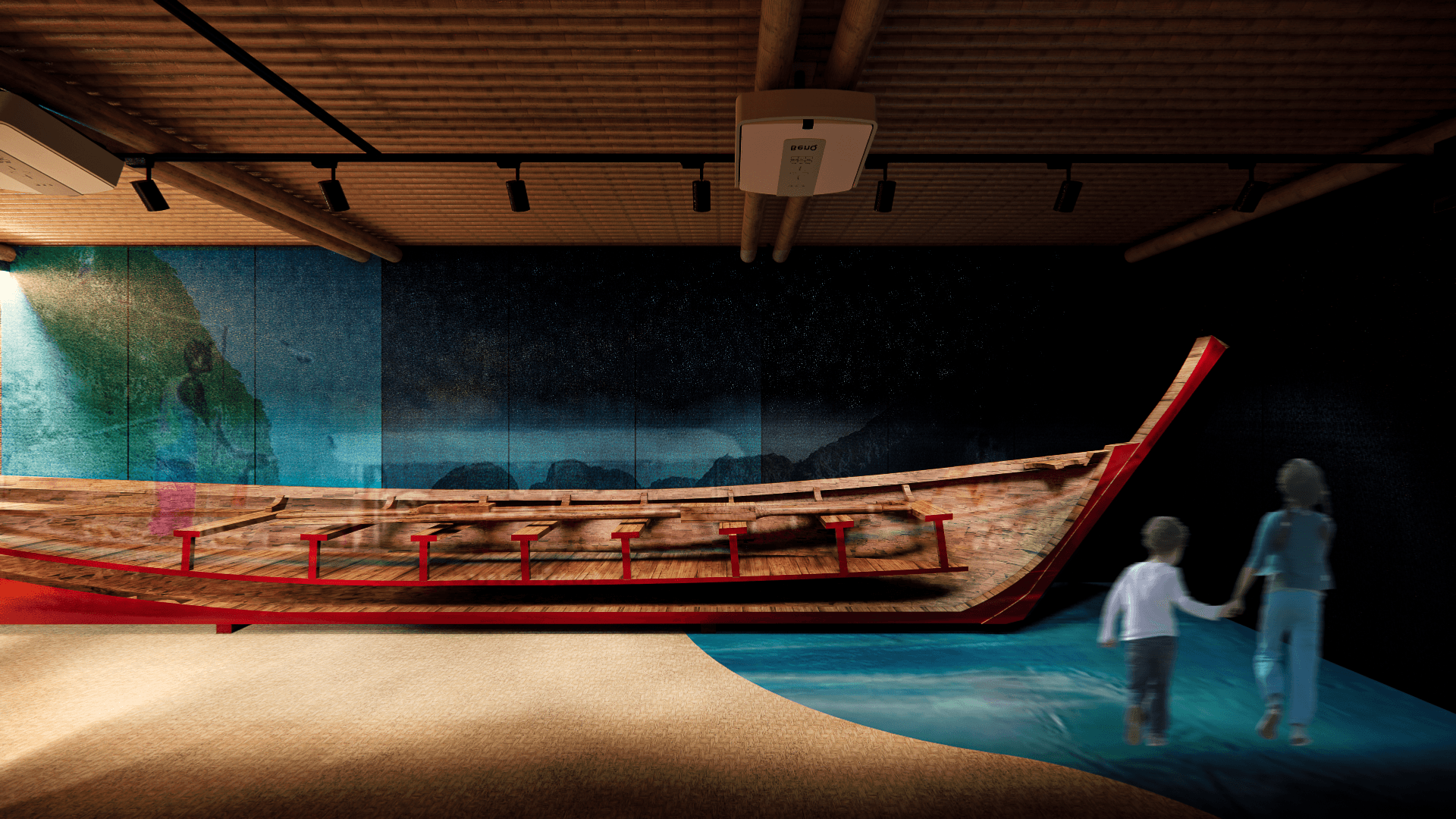


The exhibition explores Southern Thai culture through different perspectives, including Nang Talung shadow puppetry, the Sakai people, local landscapes, traditional music, and the importance of the sea to Southern communities. It also raises awareness of the need to protect and preserve marine environments together, reflecting the close relationship between the sea and coastal communities such as the Chao Lay.
The exhibition explores Southern Thai culture through different perspectives, including Nang Talung shadow puppetry, the Sakai people, local landscapes, traditional music, and the importance of the sea to Southern communities. It also raises awareness of the need to protect and preserve marine environments together, reflecting the close relationship between the sea and coastal communities such as the Chao Lay.
The exhibition explores Southern Thai culture through different perspectives, including Nang Talung shadow puppetry, the Sakai people, local landscapes, traditional music, and the importance of the sea to Southern communities. It also raises awareness of the need to protect and preserve marine environments together, reflecting the close relationship between the sea and coastal communities such as the Chao Lay.


As visitors move through the space, they encounter different experiences that allow them to engage with Southern Thai culture through hands-on activities. One area features a Nang Talung shadow puppet performance, while the space behind it allows visitors to learn how to carve their own shadow puppets using recycled materials collected from the sea. At night, the same space transforms into a performance area, bringing Nang Talung to life and allowing the tradition to continue through both participation and live performance.
As visitors move through the space, they encounter different experiences that allow them to engage with Southern Thai culture through hands-on activities. One area features a Nang Talung shadow puppet performance, while the space behind it allows visitors to learn how to carve their own shadow puppets using recycled materials collected from the sea. At night, the same space transforms into a performance area, bringing Nang Talung to life and allowing the tradition to continue through both participation and live performance.
As visitors move through the space, they encounter different experiences that allow them to engage with Southern Thai culture through hands-on activities. One area features a Nang Talung shadow puppet performance, while the space behind it allows visitors to learn how to carve their own shadow puppets using recycled materials collected from the sea. At night, the same space transforms into a performance area, bringing Nang Talung to life and allowing the tradition to continue through both participation and live performance.

Another area explores Southern Thai music and traditional performances, including Li-Ke Pa, a cultural form that has gradually faded from public memory despite being an important part of the region's heritage. The architecture also draws inspiration from traditional drum patterns and forms, integrating these elements throughout the space to embed Southern Thai culture into every part of the building.
Another area explores Southern Thai music and traditional performances, including Li-Ke Pa, a cultural form that has gradually faded from public memory despite being an important part of the region's heritage. The architecture also draws inspiration from traditional drum patterns and forms, integrating these elements throughout the space to embed Southern Thai culture into every part of the building.
Another area explores Southern Thai music and traditional performances, including Li-Ke Pa, a cultural form that has gradually faded from public memory despite being an important part of the region's heritage. The architecture also draws inspiration from traditional drum patterns and forms, integrating these elements throughout the space to embed Southern Thai culture into every part of the building.

Multiple buildings can be connected through joints and shared rope connections, allowing the overall space to adapt and expand as needed. As more modules are connected, the structure becomes more stable while creating larger spaces capable of supporting bigger activities and events.
Multiple buildings can be connected through joints and shared rope connections, allowing the overall space to adapt and expand as needed. As more modules are connected, the structure becomes more stable while creating larger spaces capable of supporting bigger activities and events.
Multiple buildings can be connected through joints and shared rope connections, allowing the overall space to adapt and expand as needed. As more modules are connected, the structure becomes more stable while creating larger spaces capable of supporting bigger activities and events.


The project also highlights the importance of marine conservation by raising awareness of coral reefs that are gradually dying. Visitors can take part in an activity where they create artificial coral structures using steel frames and fragments of dead coral, which can be returned to the sea as new habitats for marine life. This hands on experience allows people to actively contribute to the restoration of the marine ecosystem and give something back to the sea.
The project also highlights the importance of marine conservation by raising awareness of coral reefs that are gradually dying. Visitors can take part in an activity where they create artificial coral structures using steel frames and fragments of dead coral, which can be returned to the sea as new habitats for marine life. This hands on experience allows people to actively contribute to the restoration of the marine ecosystem and give something back to the sea.
The project also highlights the importance of marine conservation by raising awareness of coral reefs that are gradually dying. Visitors can take part in an activity where they create artificial coral structures using steel frames and fragments of dead coral, which can be returned to the sea as new habitats for marine life. This hands on experience allows people to actively contribute to the restoration of the marine ecosystem and give something back to the sea.